The Problem
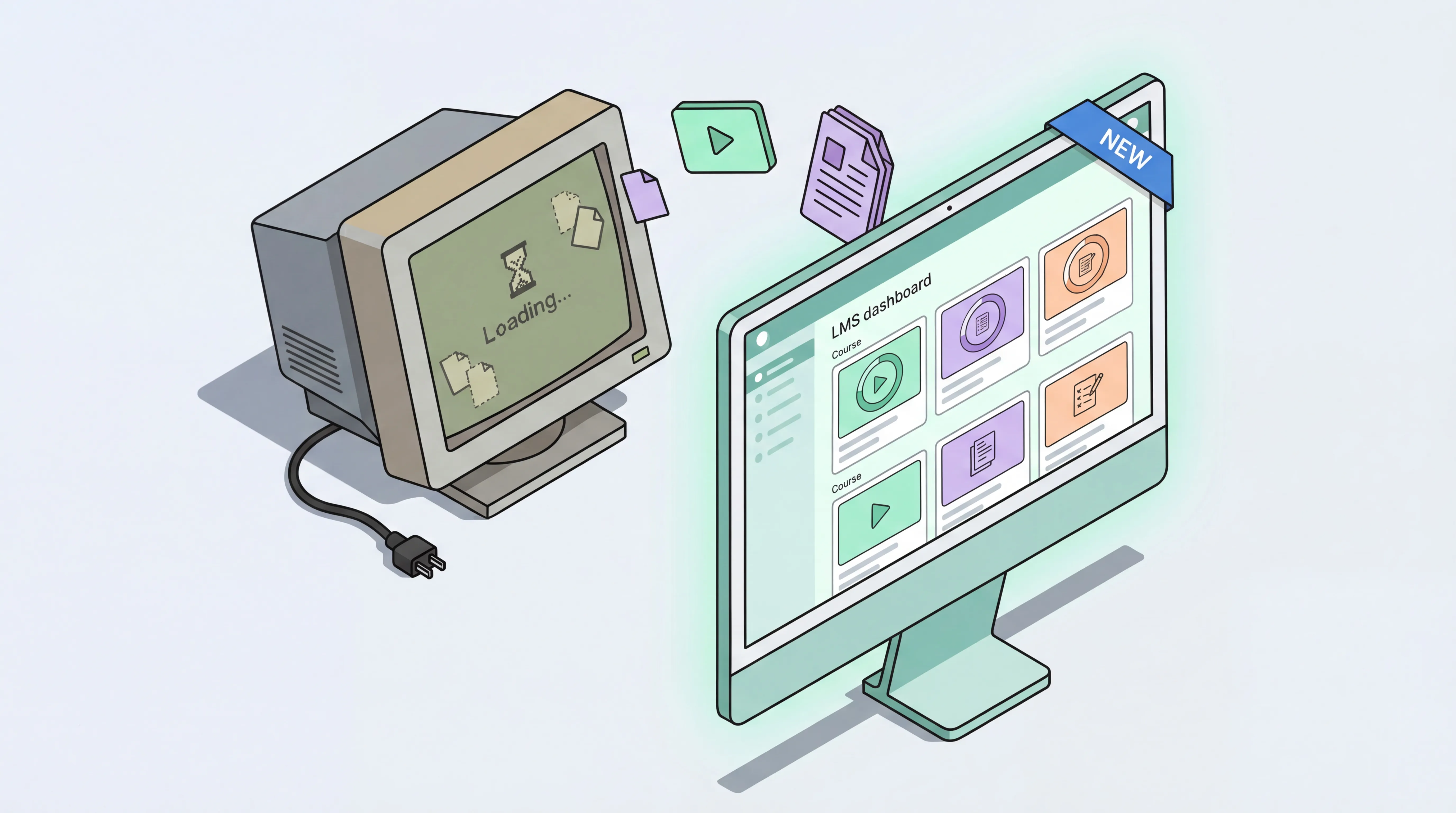
Our customer education program had outgrown its infrastructure. The existing LMS was built for a different purpose, internal corporate training, and it showed:
- Wrong audience model - Designed for employees, not customers with varying access levels
- No product integration - Couldn’t trigger learning based on in-app behavior
- Limited analytics - Completion rates existed, but no connection to product adoption
- Content scattered - Some in the LMS, some in help docs, some in one-off videos
We’d built a successful education function, but we couldn’t answer a fundamental question: Does our education actually drive product success?
The Approach
1. Requirements & Vendor Evaluation
Before looking at tools, I mapped stakeholder needs:
| Stakeholder | Key Requirement |
|---|---|
| Customers | Self-service, on-demand, role-based paths |
| CSMs | Assign learning, track progress, identify gaps |
| Product | Trigger education from in-app behavior |
| Leadership | Tie education to activation and retention |
This drove a structured evaluation of 15 LMS platforms, scoring on: customer-facing UX, internal DX, integration capabilities, analytics depth, and platform flexibility.
2. Implementation & Migration
WorkRamp won on ease of use, integration strength and analytics. The rollout included:
- Content migration — Auditing 100+ existing resources, retiring outdated content, restructuring into learning paths
- Product integration — Connecting in-app guidance to LMS courses (start a feature -> get prompted to complete related training)
- SSO and access management — Role-based permissions tied to customer segments
- Systems Integration - Bring the platform into Salesforce for both external customer data and internal usage
- Reporting infrastructure — Custom dashboards connecting course completion to product activation events
3. Change Management Adoption required:
- Teaching the Education team the platform
- Training CSMs on assigning and tracking learning
- Working with the Enablement team to build internal progression routes
- Building internal workflows for content updates
- Creating feedback loops between support tickets, CSMs and content gaps
Impact
| Metric | Outcome |
|---|---|
| Content organization | Scattered -> Unified learning paths |
| Education ↔ Product | No connection -> Usage based triggers |
| Reporting | Completion only -> Tied to activation metrics |
| CSM adoption | Optional -> Integrated into customer workflows |
A hidden win was visibility. For the first time, we could see which learning paths correlated with successful onboarding and which were being skipped by churning accounts. Education became an asset to our success and revenue teams.
What I Learned
This project helped me realize that a lot LMS implementations fail because they’re just treated as content migrations. So what I had to do was:
- Define what success looks like early in the process, before choosing tools
- Building integrations that make education feel native and embedded in the experience
- Creating feedback loops so content improves based on outcomes that we can see
This project also taught me that “education” and “enablement” are surprisingly similar to operations problems. The skills that make someone good at systems architecture like mapping data flows, connecting platforms, measuring outcomes, are the same skills that make customer education valuable.